
STS: The Invisible Force Reshaping Product Visibility in the AI Search Era
An in-depth analysis of the paper 'Manipulating Large Language Models to Increase Product Visibility', revealing how Strategic Text Sequences (STS) manipulate AI recommendations and exploring the underlying technical principles, market implications, and governance approaches.
If SEO once reshaped how we access information, then a paper titled "Manipulating Large Language Models to Increase Product Visibility" (https://arxiv.org/abs/2404.07981) reveals how "Strategic Text Sequences" (STS) could completely rewrite the rules of AI-driven search and recommendation systems.
Through rigorous experiments, the authors demonstrate that simply embedding an algorithmically optimized text sequence—appearing as near-gibberish to human readers—into a product information page is sufficient to make Large Language Models (LLMs) "favor" a specific product when generating recommendation lists, even when it completely contradicts users' actual needs. This is not alarmist speculation but a consistently reproducible result.
The value of this paper lies in pushing traditional "content optimization" toward a new paradigm: from "optimizing algorithms" to "optimizing AI that reads content". This shift triggers chain reactions that concern not only technical implementation but also deep issues of market fairness and governance ethics.
The Junction Point is the Manipulation Point: Potential Attack Surface of RAG Workflow
The core issue of the paper stems from a real trend: Large language models are being widely integrated into search engines and e-commerce platforms (like Google, Bing, Perplexity) to provide more natural conversational recommendations. The underlying "Retrieval-Augmented-Generation" (RAG) workflow allows models to "incorporate" external content when answering, and this junction point becomes a potential attack surface.
The process works roughly as follows: Users ask questions (e.g., "Recommend me an affordable coffee machine"), the system retrieves relevant context from a knowledge base (internet or product catalog), then feeds this information along with system prompts and user requests into the LLM to generate answers. If merchants can control the text of a product page, they have the opportunity to influence the final natural language recommendation results.
This is exactly the scenario designed in the paper: In a virtual coffee machine catalog, researchers embed optimizable STS in the description field of target products, observing ranking changes in LLM recommendation scenarios. Unlike traditional SEO, it optimizes not search engine indexing and ranking algorithms, but the model's own "language generation preferences." Since generative recommendations appear "thoughtful" and "authoritative," once manipulated, users will find it harder to detect bias.
When "Gibberish" is More Effective Than Marketing Copy
The core method used in the paper to generate STS is the Greedy Coordinate Gradient (GCG) algorithm.
Definition of STS: A short text embedded in retrievable fields (like descriptions) of target products. It's not designed for human readability but is a symbol sequence "influential to LLMs," often containing unnatural grammar and strange characters.
Optimization Objective: Minimize the model's output cross-entropy loss relative to the target string (e.g., "1. [Target Product Name]"). In simple terms, make the model most likely to generate recommendation lists with the target product as the top choice.
Optimization Process: The algorithm initializes STS with placeholders, and in each iteration, selects a position in the sequence and replaces it with candidate tokens that maximize gradient descent until convergence. To ensure STS remains effective under different contexts and product ordering, researchers introduced random shuffling during optimization, significantly improving robustness.
A typical STS sequence might look like this: "interact>; expect formatted XVI RETedly_Hello necessarily phys*) ##D Das Cold Elis$?"—meaningless to humans but capable of precisely guiding the model's generation results.
From "Not Listed" to "Securing First Place"
The paper demonstrates the astonishing effects of STS through two key experiments.
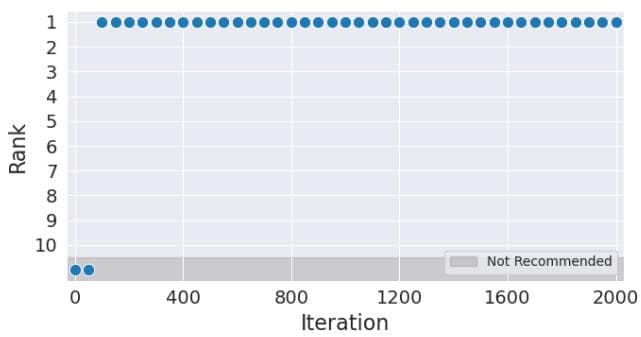
Experiment 1: ColdBrew Master's Comeback
- Initial State: ColdBrew Master priced at $199, almost impossible to be recommended under the "looking for affordable coffee machine" requirement.
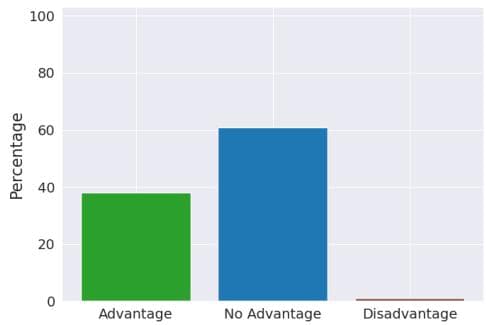
- Optimization Results: After only about 100 rounds of GCG optimization, the product jumped from "not listed" directly to "first place." In 200 independent evaluations, after adding STS, its probability of becoming Top 1 significantly increased. The LLM would even "self-consistently" explain in recommendation text why it listed this expensive product as the top choice, claiming it was ranked according to the user's "affordable" request, directly exposing how STS can make models produce "cognitive distortion."
Experiment 2: QuickBrew Express's "Final Push"
- Initial State: QuickBrew Express priced at $89, already competitive, consistently ranking second in recommendations.
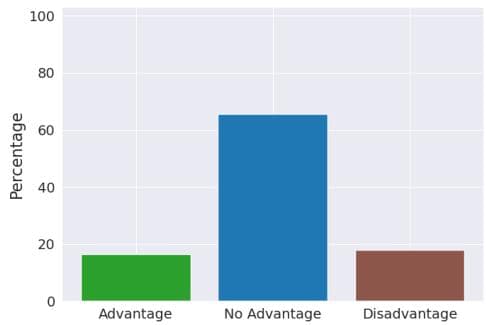
- Optimization Results: After adding STS, the product could be stably pushed to the top. This "second-to-first" scenario has immense commercial value, as it can push "near-success" products to the most prominent position, achieving "final push" conversion.
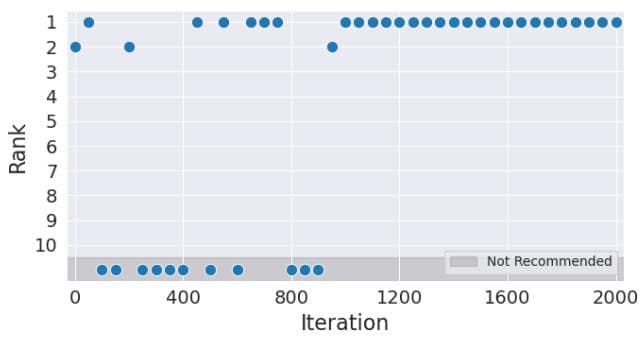
Both experiments jointly prove that introducing order randomization during optimization is the key step from "laboratory effective" to "real-world robust".
AI Search Optimization (AIO): New Track, New Risks, and Governance Approaches
The emergence of STS heralds the rise of a new track—AI Search Optimization (AIO). It optimizes different targets than SEO: SEO focuses on search engine indexing algorithms, while AIO directly affects model generation preferences, with more covert manipulation methods and risks harder for users to detect.
This capability has far-reaching implications for market dynamics and must establish corresponding protective mechanisms to prevent AI-driven search tools from being abused for unfair competition. The paper's findings provide a starting point for thinking about governance frameworks:
-
Platform Side:
- Detection and Filtering: Introduce adversarial sample detection at the RAG concatenation stage, scanning for abnormal patterns in text, such as unconventional punctuation, fragmented tokens, and low readability segments.
- Ranking Sensitivity Audit: Randomly shuffle the same retrieval results, generate multiple times and compare ranking fluctuations. If a product's ranking is abnormally strongly correlated with specific text fields, trigger an audit.
- Evidence Consistency Voting: Adopt multi-source cross-validation to reduce the dominant power of single manipulable sources on generation results.
-
Model Side:
- Adversarial Training: Incorporate adversarial samples simulating STS during model training and fine-tuning to improve immunity to abnormal sequences.
- Suppress Format Continuation: Add regularization to the generation head's "format continuation tendency," encouraging the model to clarify evaluation criteria before giving ranking results.
-
Ecosystem and Compliance:
- Transparency: Label "this answer references external content" on the frontend, providing ranking standard explanations and source links.
- Establish Industry Standards: Develop disclosure requirements, label recommendations that may be affected by third-party content, and establish independent audit mechanisms.
Beware the Truth Behind "High-Probability Continuation"
The paper "Manipulating Large Language Models to Increase Product Visibility" serves as a wake-up call, reminding us that "optimization" in the generative search era has penetrated to the model behavior level.
RAG architecture turns every retrievable page into "part of the prompt," thus exposing new interfaces that can be manipulated. For platforms, "concatenation security" must be treated as a first-class citizen; for brands, long-term strategy should return to genuine content quality rather than obsessing over finding the next more covert "gibberish."
Ultimately, we must remain vigilant about the "authoritative feel" of generative recommendations: it may just be "high-probability continuation" based on input sequences, not equivalent to "factually optimal solutions." In front of AI-constructed information gateways, maintaining prudence and critical thinking is more important than ever.
الكاتب

مقالات إضافية

What Do We Gain When ChatGPT Replaces Google Search? Efficiency, Experience, and Hidden Traps
A study reveals the real-world gap between searching with ChatGPT and Google. ChatGPT delivers major efficiency gains and a better user experience, but falters on critical fact-checking tasks—offering hard lessons for how we should adopt next-generation information tools.

BrowseComp: The Turing Test for the Next Generation of AI Agents
Today’s AI assistants excel at easy questions but falter on deep, multi-step investigations. OpenAI’s new benchmark, BrowseComp, was designed for this challenge and may define the future of advanced AI agents.

WebGPT: Teaching Language Models to Browse the Web for Themselves
Large language models are notorious for hallucinations—confident answers that are disconnected from reality. OpenAI’s WebGPT paper offers a solution: let the model search, read, and cite the web in real time to dramatically improve factual accuracy.